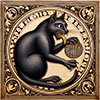
This coin should not have its own page under Uruguay. Coins from a certain country used in another do not have their own pages, like Ecuador doesnt have their own pages for US currency. This page should be removed and its usage in Uruguay should be added as a note in the Argentinian page.
If it was originally struck for use in Argentina, perhaps it should be kept there, and notes added in the Comments on its use in Uruguay, and then the Uruguay listing removed.
Sorry for thinking different, but this coin should be listed at Uruguay too. It was the first coin issued by Uruguayan government on 1831, using the remains of this coin that was demonetized in Argentina on 1827.
Other coins from a country were used on a different one, generally countermarked. In this case countermark was not needed, cause the coin was not used anymore at Argentina.
Text of the Law# 17 (March 14th., 1831) is clear:
Spanish: “Artículo único.- Se autoriza al Poder Ejecutivo para emitir a la circulación para los cambios menores de un real, hasta la suma de veinte mil pesos de la moneda que se rescatase, conocida por décimos de la Provincia de Buenos Aires, por la mitad de su valor escrito.”
English: “Only article.- Executive Power is authorized to issue for circulation, for amounts smaller than one real, up to the amount of twenty thousand pesos of the coinage rescued, known as décimos de la Provincia de Buenos Aires (tenths of the Buenos Aires province), for half of its written value”
On Wikipedia can be seen this statement: “To meet the need for small change, the government obtained Buenos Aires coins of one-tenth real (décimos de la ciudad de Buenos Aires; 24 mm, dated 1822 and 1823), and put about 1·6 million of them into circulation at half face value (Law 17 of 15 March 1831). This is considered the first money issued by República Oriental del Uruguay.” Article
It's to be noted :
- These coins were minted for be used at Buenos Aires province (they bear the legend “BUENOS AYRES”, as was the spelling on that time), but circulated also on other provinces.
- They circulated at Buenos Aires province from 1822 to 1827, when were demonetized and replaced with the 1827 issue. (5 years)
- Were issued as Uruguayan currency on 1831, and were demonetized by the Uruguayan currency reform Law of 1862, that changed from Real system to Decimal system, and had effect on 1863. (32 years, but in fact they continued circulating till first years of 20th. Century, after first nickel coins with values 1, 2 and 5 cents were issued. (over 70 years)
- Were the only coin issued by the government up to the first coins minted at Montevideo on 1840. (9 years)
So, it was legal tender for longer time at Uruguay than at Buenos Aires (Argentina).
This coin is listed on the main Uruguayan catalogs:
Catalog SA (Catálogo de Monedas del Uruguay 1831-2017 - Marcos Silvera Antúnez), page 5.
Catalog CG (Catálogo General de Monedas de Uruguay - Mario Sánchez - Eduardo Freijanes - Ramón Rodriguez Hernández), page 18.
Additionally, being referee for Uruguayan coins from about 10 years, maybe I could have been warned, in case of I had a different opinion. Also Argentina referee @gvaicika should have been advised, as he accepted the cross reference.
Just 10 options: you understand binary, or you don't.
Catalog Referee Coins, Banknotes & Exonumia: Uruguay, Cuba, Bolivia, Brazil, Chile, Colombia, Mexico, Peru, Paraguay, Costa Rica, Venezuela, Panama, Ecuador, Zamunda, Parva Domus and more.
Yes, informing the responsible referee is often not done which is not good but if a coin is the exact same it simply doesn't belong in more then one catalog page. Similar to those Australian proclamation coins from the UK that we had for many years were just used in different values but are the exact same coins without alteration, were not produced there in exclusive years. Without provenances nobody could know if they were once used in Australia or not.
Many countries also use the US dollar but we don't put it outside the issuing country.
Yes, informing the responsible referee is often not done which is not good but if a coin is the exact same it simply doesn't belong in more then one catalog page. Similar to those Australian proclamation coins from the UK that we had for many years were just used in different values but are the exact same coins without alteration, were not produced there in exclusive years. Without provenances nobody could know if they were once used in Australia or not.
Many countries also use the US dollar but we don't put it outside the issuing country.
But the difference is those coins, and also notes are used on Panamá, El Salvador, etc., and they use as current money the U. S. Currency; the coins and notes are not issued by these countries; therefore they just accept the economical policy at the origin country.
In this case, the face value was modified by Law (not modified the coin), was issued, and later demonetized by Uruguay. As said before, is the same case as countermarked coins, but they were not countermarcked.
Just 10 options: you understand binary, or you don't.
Catalog Referee Coins, Banknotes & Exonumia: Uruguay, Cuba, Bolivia, Brazil, Chile, Colombia, Mexico, Peru, Paraguay, Costa Rica, Venezuela, Panama, Ecuador, Zamunda, Parva Domus and more.
Look... it wasn't the first time that an important change like this was made, without prior consultation with the issuer's referee.
Many here have extensive knowledge and there is no doubt about that, but an issuer's referee is the best person to give an opinion on changes requested by any other user.
It is, above all, a matter of respect for the work of those who spend a lot of time dedicating themselves to making Numista a source of increasingly research-based information.
It would be extremely important that, for issuers that have arbitrators, they are always consulted; which this time did not happen.
Regards,
Vladimir.
Vladimir
Catalogue Administrator and Banknote Master Referee.
In this case, the face value was modified by Law (not modified the coin), was issued, and later demonetized by Uruguay. As said before, is the same case as countermarked coins, but they were not countermarcked.
That is the exact same case like the Australian proclamation coins I've mentioned. They are now like it should be mentioned in the comments (LINK).
Yes, informing the responsible referee is often not done which is not good but if a coin is the exact same it simply doesn't belong in more then one catalog page.
Same overarching problem of to many pages for the same coin which is already addressed in the comment sections trying to get rid of one or even both pages but not the same in the sense that this coin year and mint mark version was exclusively made for these places giving one page legit reason to exist besides the Dutch one.
It is not like the Uruguayan case were they just used already existing old coins without altering them. The same was done with countless ancient and medieval coins and many other, more modern coin issues too (but most often they were manipulated, punched or marked in some other manner).
Yes, informing the responsible referee is often not done which is not good but if a coin is the exact same it simply doesn't belong in more then one catalog page.
Correct. This is in comments section of both pages: "While Krause lists these coins under Curaçao (KM#39a), more coins were struck for Suriname though, where it is listed as well. Discussion has taken place where to put these coins in the Numista catalog. In the Dutch catalog Muntalmanak (Schulman), the coin is placed under the Netherlands and in the Dutch catalog regarding the overseas territories (Scholten) the coins can be found under the West-Indies section (1365). The concerning referees decided to put them under both the countries on Numista." (I am one of the 3 referees involved).
In the Uruguayan/Argentinian coin, gvaicicka and I discussed the point and also agreed to put them in both countries; proof of it was the link existed between them, it meant we both were OK with the “double” appearance; before removing, someone should have noticed the implicit OK from referees, and before acting, check with them.
With the “dutch” coins, the situation has a subtle difference: that coin was made intended to circulate on both countries, and of course, at same time; on our coin, did not circulate at same time, and the given value was different. As said before, countermark was not needed, for the coin was already demonetized 4 years before at Argentina, the rescued coins were used to remint the new 1827 & 1828 5/10 Reals of Buenos Ayres, so the coins used in Uruguay were not the ones existing at Argentina (they could be exchanged for 1/10 Real at Argentina, while the value at Uruguay was 1/20 Real - half tenth Real).
Just 10 options: you understand binary, or you don't.
Catalog Referee Coins, Banknotes & Exonumia: Uruguay, Cuba, Bolivia, Brazil, Chile, Colombia, Mexico, Peru, Paraguay, Costa Rica, Venezuela, Panama, Ecuador, Zamunda, Parva Domus and more.
If I were Uruguayan, I would not be claiming currency minted before my country was established as my own.
Cited law only declares that coins minted by other state are legal tender. It also acknowledges that those coins are Argentine's coins.
Each country has its own history, and the evolution of ex-colonies is a very complicated process. It is not easily possible to fix the date when a country became reality. How can you determine it?
The date of the start of Revolution? It is a long list of events: when Patriots started to join; when first revolt happened, the first battle fought, the last battle…. Since there is not an armistice document, it's not possible to fix the “end”; after last notorious battle still were many other little confrontations.
The date of first Laws? The date of first Constitution? The end of Civil war?
Uruguayan independence process was one of the longest in America, so still historians discuss what is the “country starting date". The independence and stability process lasts approximately from 1811 to 1851.
Therefore, the statement “before my country was established as my own” reveals the low knowledge of Uruguayan history.
“It also acknowledges that those coins are Argentine's coins” There is not that statement at the Law, Coins were issued by Buenos Ayres Province (as is motioned at the Law), since Argentina did not exist with that name at the date. Provinces (Buenos Ayres, Córdoba, La Rioja, Tucumán, Entre Ríos, Santiago del Estero, Mendoza, Tierra del Fuego) were independent issuers, later, on 1854 were issued the first coins of Confederación Argentina, as issuer for all the provinces, and the first coins bearing “República Argentina” are from 1881.
Just 10 options: you understand binary, or you don't.
Catalog Referee Coins, Banknotes & Exonumia: Uruguay, Cuba, Bolivia, Brazil, Chile, Colombia, Mexico, Peru, Paraguay, Costa Rica, Venezuela, Panama, Ecuador, Zamunda, Parva Domus and more.
If I were Uruguayan, I would not be claiming currency minted before my country was established as my own.
Cited law only declares that coins minted by other state are legal tender. It also acknowledges that those coins are Argentine's coins.
Each country has its own history, and the evolution of ex-colonies is a very complicated process. It is not easily possible to fix the date when a country became reality. How can you determine it?
The date of the start of Revolution? It is a long list of events: when Patriots started to join; when first revolt happened, the first battle fought, the last battle…. Since there is not an armistice document, it's not possible to fix the “end”; after last notorious battle still were many other little confrontations.
The date of first Laws? The date of first Constitution? The end of Civil war?
Uruguayan independence process was one of the longest in America, so still historians discuss what is the “country starting date". The independence and stability process lasts approximately from 1811 to 1851.
Therefore, the statement “before my country was established as my own” reveals the low knowledge of Uruguayan history.
“It also acknowledges that those coins are Argentine's coins” There is not that statement at the Law, Coins were issued by Buenos Ayres Province (as is motioned at the Law), since Argentina did not exist with that name at the date. Provinces (Buenos Ayres, Córdoba, La Rioja, Tucumán, Entre Ríos, Santiago del Estero, Mendoza, Tierra del Fuego) were independent issuers, later, on 1854 were issued the first coins of Confederación Argentina, as issuer for all the provinces, and the first coins bearing “República Argentina” are from 1881.
Uruguay declared independence in 1825 and then secured independence in 1828 following a three-year conflict with Brazil and the dissolution of its federation with Argentina.
Coin was minted in 1822-23 in Buenos Aires. That's the part of United provinces that is current day Argentina. Your government found stash of copper in their lockers and decided to use them as legal currency to pay their bills without even bothering to counterstamp them. In history books Argentina is successor state of United provinces cause Spanish selected Buenos Aires as capital for their colonies in that region. If you have counterstamped N#4089 , feel free to argue that it belongs to Uruguay. If there is no evidence that coin was part of that 20000 real stash, coin belongs to Argentina.
You decided to nitpit about wording just cause I used Argentina instead of United Provinces of the Río de la Plata.
My country has own history with historical territorial claims for every neighbor and even beyond that. I have book which claims that coins minted in one of those territories with their coat of arms belong to my country. I have no plans of pushing that narrative into this catalogue.
How is this situation any different from spanish colonial reales. By law, they were legal tender in the US, even after the fall of most of of the colonial empire. Should those be added into the US catalog?
How is this situation any different from spanish colonial reales. By law, they were legal tender in the US, even after the fall of most of of the colonial empire. Should those be added into the US catalog?
Unlike the colonial Reales which circulated in the United States, in this case with this coin due to similar historical processes, culture, same languaje, geographic proximity (less than 400 km), are very closer beetween the province of Buenos Ayres and Uruguay because are brother towns (Pueblos Hermanos). In my humble opinion, It's very debatable and that is the reason why this piece originally appeared in the catalogue of the province of Buenos Ayres and also in Uruguay. Since this coin is considered the first coin of Uruguay in specialized catalogs.
On the other hand, this coin circulated with other denomination in Uruguay unlike when it circulated in Buenos Ayres.
For all mention above, these kind of coins are in a gray line and before automatically eliminating it from a catalogue, Referees involved should first be consulted and these are things that cannot be taken lightly.
That is why this case cannot be compared with the Dollars which circulated in Ecuador as they gave as an example since in the numismatic catalogs of Ecuador you will not find catalogued US dollar bills :)
This is quite irrelevant. If you can't differentiate on physical properties one catalog page it is and if you have a catalog put the reference on the original coin page so you can have it in a search with all the other coins when you filter for the reference and remove the issuer filter. Add a comment that explains a bit about the historical importance too. Maybe in the future there will be a way to link to multiple places but that's not now.
This is quite irrelevant. If you can't differentiate on physical properties one catalog page it is and if you have a catalog put the reference on the original coin page so you can have it in a search with all the other coins when you filter for the reference and remove the issuer filter. Add a comment that explains a bit about the historical importance too. Maybe in the future there will be a way to link to multiple places but that's not now.
I agree that with a multiple link these kind of problems will no longer exist in the future.
The current problem is that this innovation does not yet exist and that is why referees of Uruguay and Buenos Aires (Argentina) agreed to enter this very important coin also into the catalog of Uruguay, which served as help and facilitate collectors who only collected Uruguayan coins where it was easier to search for it, add it with the correct denomination (1/2 Decimo) and within this country.
Now when this page was deleted in this country and no multiple link tool available, the Uruguayan coin collector lost this option and they have to catalog it within Buenos Aires and it will appear as 1 Decimo.
Finally to be honest, if it were another coin the truth is that absolutely nothing would happen, the issue is that this piece is considered by the highest authority which is the Central Bank of Uruguay and by Uruguayan numismatic catalogs as the first coin of Uruguay (Law#17 March 15th, 1831) hence the importance of mentioned above and because it should not be taken as irrelevant at least this piece.
You decided to nitpit about wording just cause I used Argentina instead of United Provinces of the Río de la Plata.
No, I just pointed that Argentina and United Provinces of Rio de la Plata were not the same; Banda Oriental (Oriental Band), that included most of the present Uruguay and part of the Brazilian south territory (Misiones) was part of the Provinces., later Portuguese-Brazilian forces invaded Uruguay and created the Cisplatine Province, including Uruguay, and most of current Rio Grande do Sul Brazilian State.
On 1825, when Uruguay declared Independence, rejoined to Provinces del Rio de la Plata; later the Montevideo Treaty (1828) was issued by Brazilian Empire and Provinces of Rio de la Plata; therefore Uruguay became officially part of the Provinces. On 1830, the Constitution declared the country Independent from all other countries.
tokul
Coin was minted in 1822-23 in Buenos Aires
No, coin was minted in United Kingdom.
Just 10 options: you understand binary, or you don't.
Catalog Referee Coins, Banknotes & Exonumia: Uruguay, Cuba, Bolivia, Brazil, Chile, Colombia, Mexico, Peru, Paraguay, Costa Rica, Venezuela, Panama, Ecuador, Zamunda, Parva Domus and more.
How is this situation any different from spanish colonial reales. By law, they were legal tender in the US, even after the fall of most of of the colonial empire. Should those be added into the US catalog?
At the time of Spanish colonies and for long time after, coins were received by its contents of metal, specially gold and silver; therefore many countries issued Laws ALLOWING to tu be received certain foreign coins. I have never seen any Law NAMING THEM LEGAL TENDER, out of the mentioned Uruguayan Law, that issued the coins.
So, the difference is to accept them versus becoming legal tender.
Just 10 options: you understand binary, or you don't.
Catalog Referee Coins, Banknotes & Exonumia: Uruguay, Cuba, Bolivia, Brazil, Chile, Colombia, Mexico, Peru, Paraguay, Costa Rica, Venezuela, Panama, Ecuador, Zamunda, Parva Domus and more.
There are coins of Protectorate of Bohemia which then circulated in restored Czechoslovakia, we also do not list them in Czechoslovakia.
Protectorate of Bohemia an Czechoslovakia are not in my range of collection and study, so I know nothing about them. Those Bohemian coins were issued by Czechoslovakia? I mean is there any law issuing the coins?, or they just circulated as is usual on many new or restored countries? Maybe is not the same case.
Just 10 options: you understand binary, or you don't.
Catalog Referee Coins, Banknotes & Exonumia: Uruguay, Cuba, Bolivia, Brazil, Chile, Colombia, Mexico, Peru, Paraguay, Costa Rica, Venezuela, Panama, Ecuador, Zamunda, Parva Domus and more.
This is quite irrelevant. If you can't differentiate on physical properties one catalog page it is and if you have a catalog put the reference on the original coin page so you can have it in a search with all the other coins when you filter for the reference and remove the issuer filter. Add a comment that explains a bit about the historical importance too. Maybe in the future there will be a way to link to multiple places but that's not now.
I agree that with a multiple link these kind of problems will no longer exist in the future.
The current problem is that this innovation does not yet exist and that is why referees of Uruguay and Buenos Aires (Argentina) agreed to enter this very important coin also into the catalog of Uruguay, which served as help and facilitate collectors who only collected Uruguayan coins where it was easier to search for it, add it with the correct denomination (1/2 Decimo) and within this country.
Now when this page was deleted in this country and no multiple link tool available, the Uruguayan coin collector lost this option and they have to catalog it within Buenos Aires and it will appear as 1 Decimo.
Finally to be honest, if it were another coin the truth is that absolutely nothing would happen, the issue is that this piece is considered by the highest authority which is the Central Bank of Uruguay and by Uruguayan numismatic catalogs as the first coin of Uruguay (Law#17 March 15th, 1831) hence the importance of mentioned above and because it should not be taken as irrelevant at least this piece.
Now that you mention it, I see we made a mistake, and it was to name the page a Décimo instead as Half Décimo. I think it was this way as the numismatist and catalogs name it as Décimo only.
Again, my comfortless comes from decision was lightly taken without any word to involved referees (Argentina and Uruguay); it is obvious we both agreed, since there were links approved between pages, and text explaining the situation were place on both too. I find funny the fact when we ask for questions, we are explained the Admins' point of view and advised on how to act, but most of times, if not all, we are said as we are the referees, the last decision is ours, and when is needed to add a date line, or correct other small details details, we are sent PMs and/or poked on forum, which did not happen in this case.
If Admins decision is not to restore the erased page and the links, I accept the decision, but for sure I do not agree with it. I know Admins know the arguing, cause must receive notifications of new posts in forum, but so far we have not received any direct message about this issue.
Just 10 options: you understand binary, or you don't.
Catalog Referee Coins, Banknotes & Exonumia: Uruguay, Cuba, Bolivia, Brazil, Chile, Colombia, Mexico, Peru, Paraguay, Costa Rica, Venezuela, Panama, Ecuador, Zamunda, Parva Domus and more.