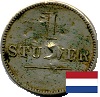
The catalog indicates that the Suriname 10 cent KM# 13a should be magnetic. I just got a 1987 and this coin is not magnetic. The non-magnetic KM# 13 has no 1987.
So, I searched further because there was no match. The KM# 13a coins are made of Nickel plated Steel, just like the 25 cents KM# 14a, but for this type there is no mention of magnetic or non-magnetic. I've got a 1987 and 1988 KM# 14a and they are also both non-magnetic.
I think the only explanation is that there is a mistake on the coin page and the KM# 13a isn't magnetic either.
Or is there anybody who has a magnetic KM# 13a? Please let me know if you have one. If nobody can confirm this I'll make a change request for the KM# 13a.
And I'm sorry for starting this subject again. I read every post on the forum since my membership a few months ago but it's impossible to go back there for several years. So I had no knowledge that this question already raised in the past.
Meanwhile I read the previous posts about this subject and what I don't understand is that the change request of ArnoV was declined:
Citation: ArnoVMy change request was declined: more evidence was required. I wouldn't know where to get it. Apparently NGC/Krause is wrong - then what else source could we turn to? The Muntalmanak wasn't enough, clearly.
So far, nobody came up with evidence of a magnetic KM#13a. But we need some 'soft' evidence (documentation) to back up the 'hard' evidence (the coins).
When so many members have questions about this subject and they all find non-magnetic coins and no one finds magnetic coins, I think we may assume the problem is just a mistake in the Numista catalog.
Besides, in the 2015 Standard Catalog of World Coins they don't even talk about magnetic or non-magnetic:
As long as this mistake isn't changed in the catalog, every now and then new members will come up with this issue, just like I did now.
I resubmitted my change request once more to get rid of the magnetic/non-magnetic tag for the 10ct piece.
According to Krause, the later variety is made of nickel plated steel, while the Dutch Muntalmanak simply repeats 'as previous', implying that it's copper nickel. I have no idea how to test which one is true.
Steel is magnetic, usually, but the coins aren't.
In the Schön catalogue all coins from 1962 until today are listed under one # and said to be Copper-nickel. Actually non magnetic steel exists but isn't it possible to see a difference between Copper-nickel and Nickel?
And what about the 25 Cent, isn't it the same problem there?
I'm not orange and also in other things I'm not a Donald at all. DonChori like Don Felipe or Doña María, por favor.
Citation: DonChoriIn the Schön catalogue all coins from 1962 until today are listed under one # and said to be Copper-nickel. Actually non magnetic steel exists but isn't it possible to see a difference between Copper-nickel and Nickel?
And what about the 25 Cent, isn't it the same problem there?
The problem with the 25 cents should be identical.
But guess what. For that coin there is no problem because there is no mention of magnetic or non-magnetic in the catalog. So coins before 1987 are added as KM# 14a, coinf from 1987 on are added as KM# 14.
I checked several editions of the Standard Catalog of World Coins (1984, 1995, 2006, 2015) and none of them mentioned if the types are magnetic or non magnetic.
I don't know on which ground that mention is based here on the catalog but even with a system of referees and Numista team members mistakes still can occur. And sometimes it's wise to use common sense instead of being too bureaucratic.
So ArnoV, I hope this time your change request will finally be validated and the confusion about this coin stops.
Citation: Essor ProfAs long as this mistake isn't changed in the catalog, every now and then new members will come up with this issue, just like I did now.
When will this confusing mistake finally be corrected and the change request of ArnoV validated? This subject already appeared on the forum several times during the past years and it will continue in the future as long as this mistake isn't set right.